

The wick is the heart of all candles
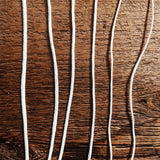
You can have the finest wax available, but if the wrong wick is inside it, nothing will make that candle burn at its best. As a candle buyer, you'll never know which wick your candle maker used - but an experienced maker will spend weeks, sometimes months, testing to find the perfect wick for a particular candle. With hundreds of wicks to choose from, it's a bigger task than choosing the wax itself. You can have the purest beeswax with the most beautiful natural honey scent, but with the wrong wick inside, you won't get the burn you were hoping for. So what can you do as a candle buyer? Watch the flame. It tells you everything.
What does a badly wicked candle look like?
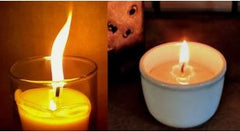
When you burn a candle, is the wick constantly needing attention? Is the flame very tall, very pointy, dancing back and forth? All wicks need attention eventually - usually after an hour or two of burning. But if a wick creates tall, jumpy flames and puffs of smoke right from the start, with no air movement nearby, that wick was the wrong choice for that candle. That candle should not have been sold to you.
Even a great wick will start misbehaving after several hours without a trim (or near a drafty window). We're talking about wicks that misbehave from the first light and keep misbehaving after diligent trimming. If you're spending more time trimming than enjoying, you likely bought from an inexperienced maker - or one who skips wick testing. Also watch for the opposite problem: a weak, struggling flame that never melts the wax out toward the edges, or ends up drowning in its own melt pool.
Do bigger wicks mean better candles?
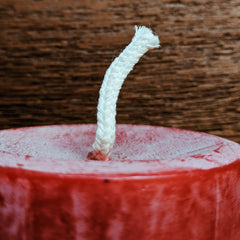
In the simplest terms, a wick is a straw that draws up melted wax for fuel. The larger the wick, the faster the wax travels up it. Whenever I see a very large wick on a candle, I wonder about that candle's quality. Makers choose oversized wicks for a few reasons: the beeswax wasn't filtered as well as it could be and needs a bigger wick to handle the impurities, or there's a lot of added colorant and fragrance the wick has to work hard to pull up. A well-filtered, pure beeswax candle doesn't need a giant wick to burn beautifully.
Why does candle shape matter?
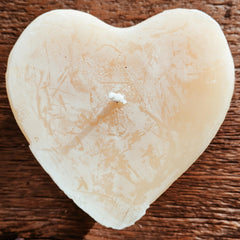
As a candle maker, whenever I see beeswax candles in fun, decorative shapes, my first thought is: "How did they wick this?" Every wick is made to burn out to a certain radius. When a candle's width varies a lot - think of a large heart-shaped candle - the maker has to choose which part of the shape to wick for. A careful maker wicks for the narrowest part, so the flame never melts through the candle's wall. That's the safe choice, and it means a lot of beeswax in the wider sections will go unused. If you love decorative shapes, enjoy them! Just know the physics and expect leftover wax. The best-burning beeswax candles will always be uniform cylinders - pillars, votives, tea lights - because that's the shape wicks were born to serve.
Let your eyes and nose be the judge
There are a lot of beautiful beeswax candles out there waiting for you to light up and enjoy, so have fun trying new candle companies and new types of candles. You may surprise yourself and discover a candle you never expected to love (that's how I felt when I discovered skinny beeswax tapers!). Keep an eye on each candle's flame - which is fun to do anyway - and you'll soon know which candles and which makers you prefer.
Read more: Our complete guide to the best beeswax candles of 2026 → · The best beeswax candle companies, named →
Thanks for stopping by!
Bee Cozy!
This post is part of our How to Buy the Best Beeswax Candles series on Flicker.


